Building a Dynamic Digital Identity for Global Anti-Piracy Technology Leaders
Rebuilding information architecture and brand identity for a global leader in anti-piracy technology and content security.
Project tags
Client Summary
Background and industry context
Friend MTS is a UK leader in video content security, providing anti-piracy solutions to sports, media, and entertainment clients. Despite their technical expertise and Emmy®-winning technology, their digital presence wasn't reflecting the maturity of their offerings. The brand struggled to communicate what made them different in a rapidly shifting market, and the existing site structure was limiting their ability to properly showcase their capabilities.
Project Summary
Context, challenge, and deliverables
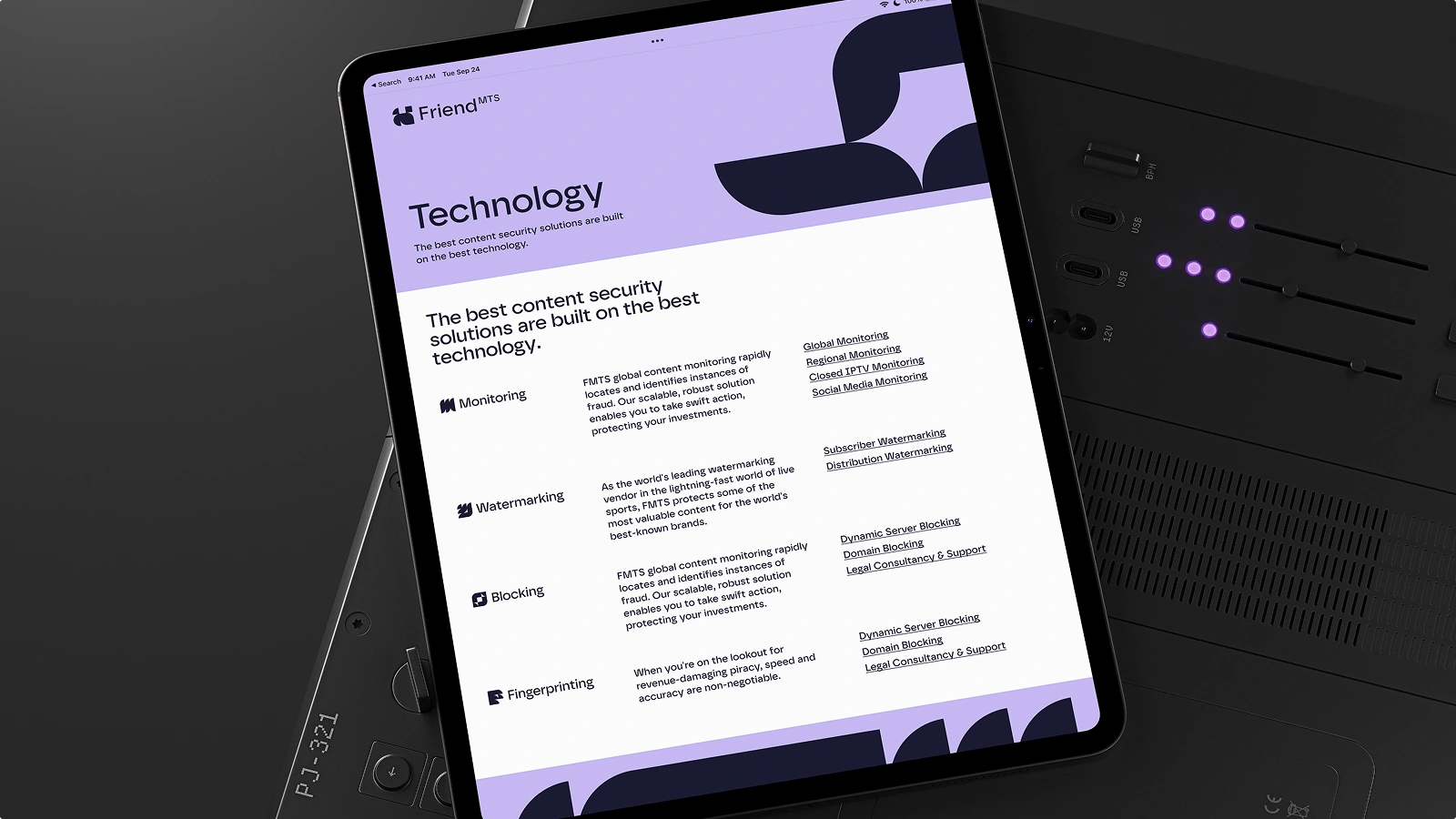
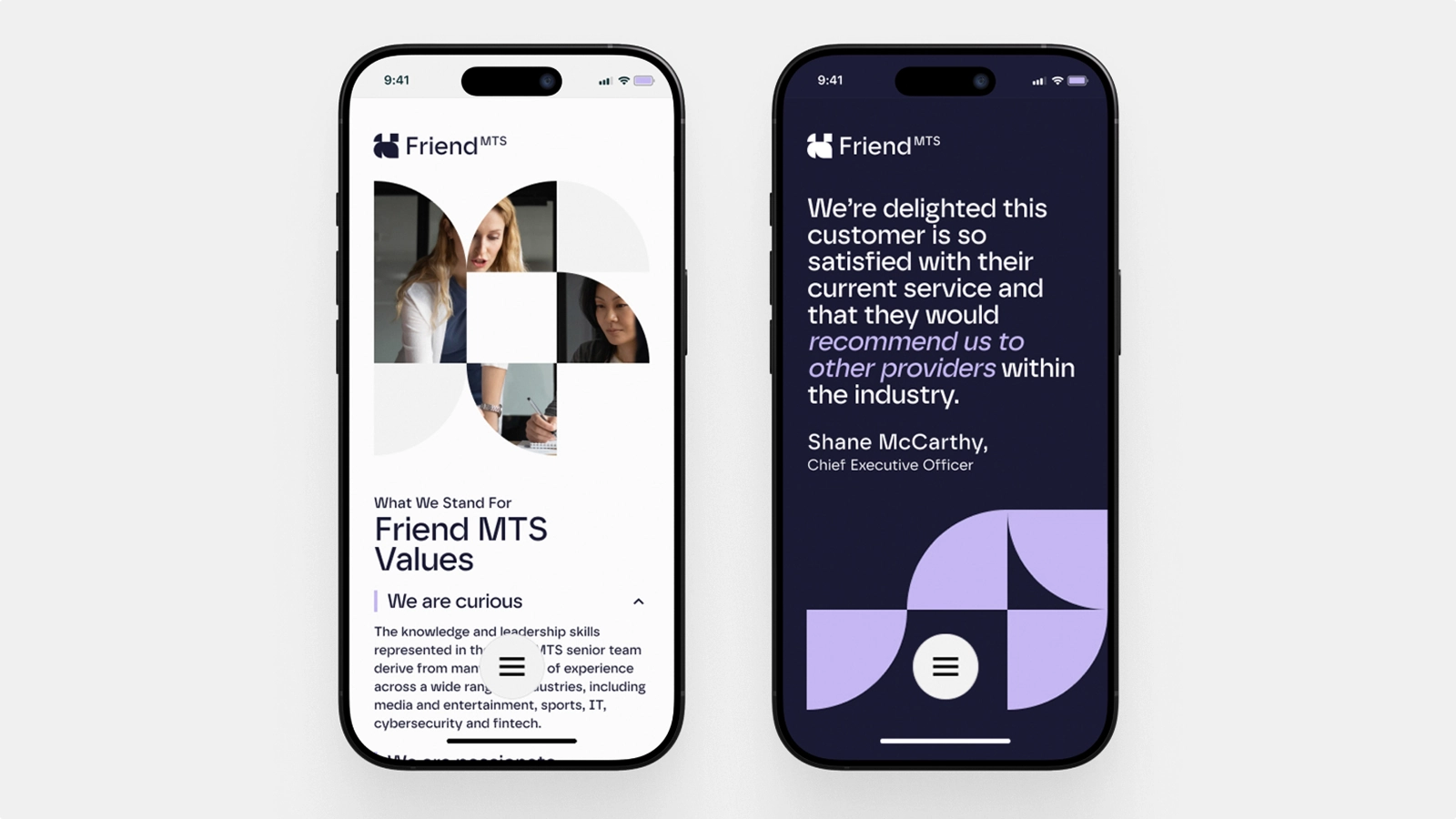
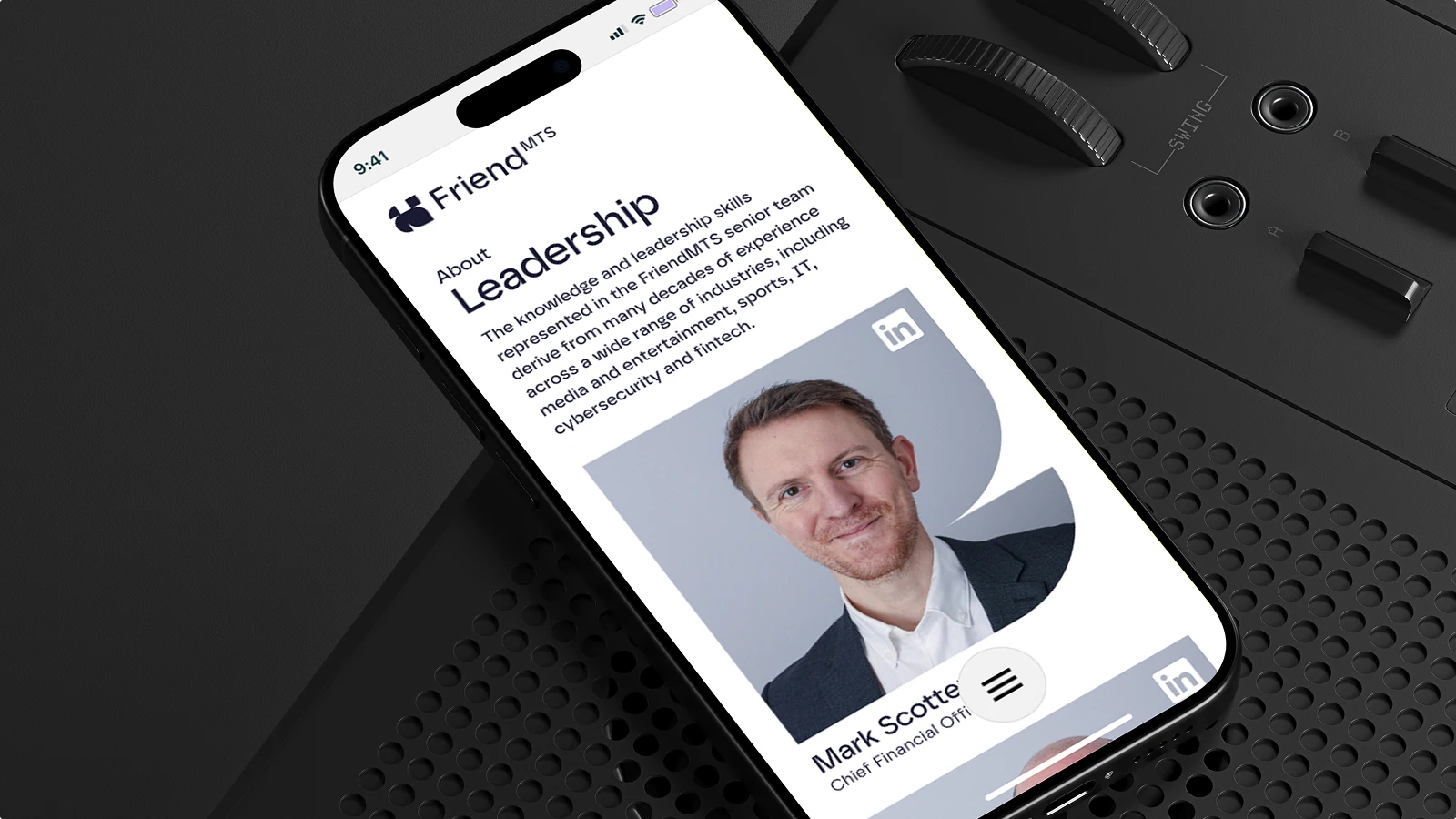
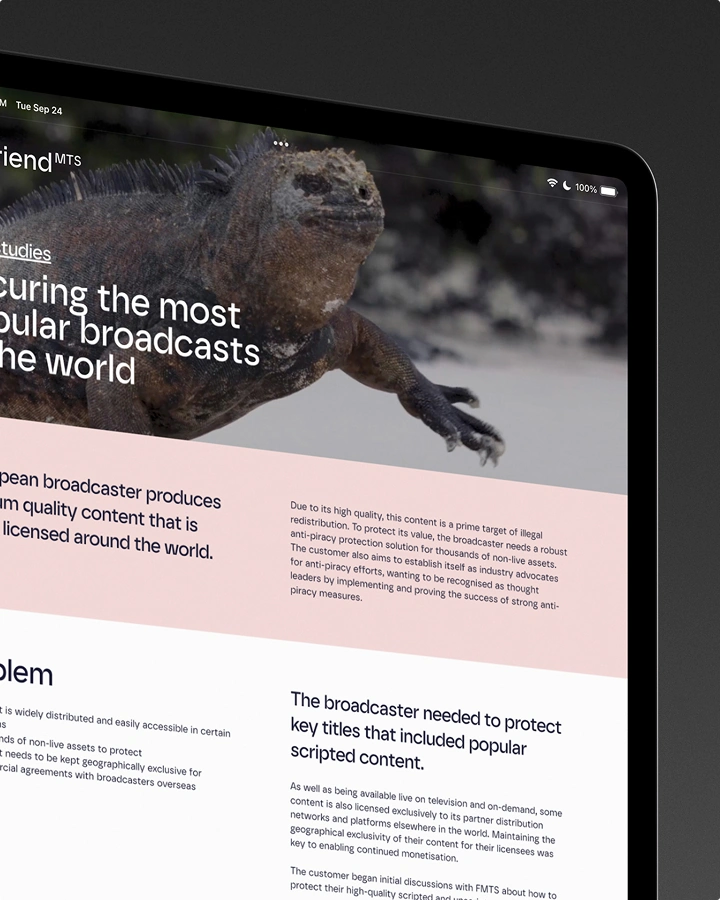
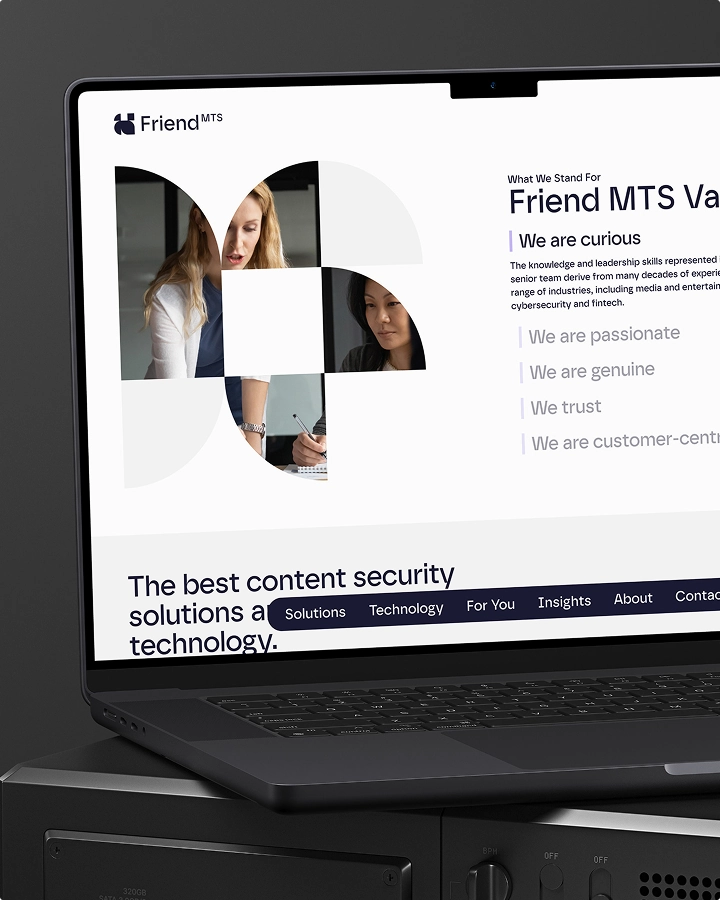
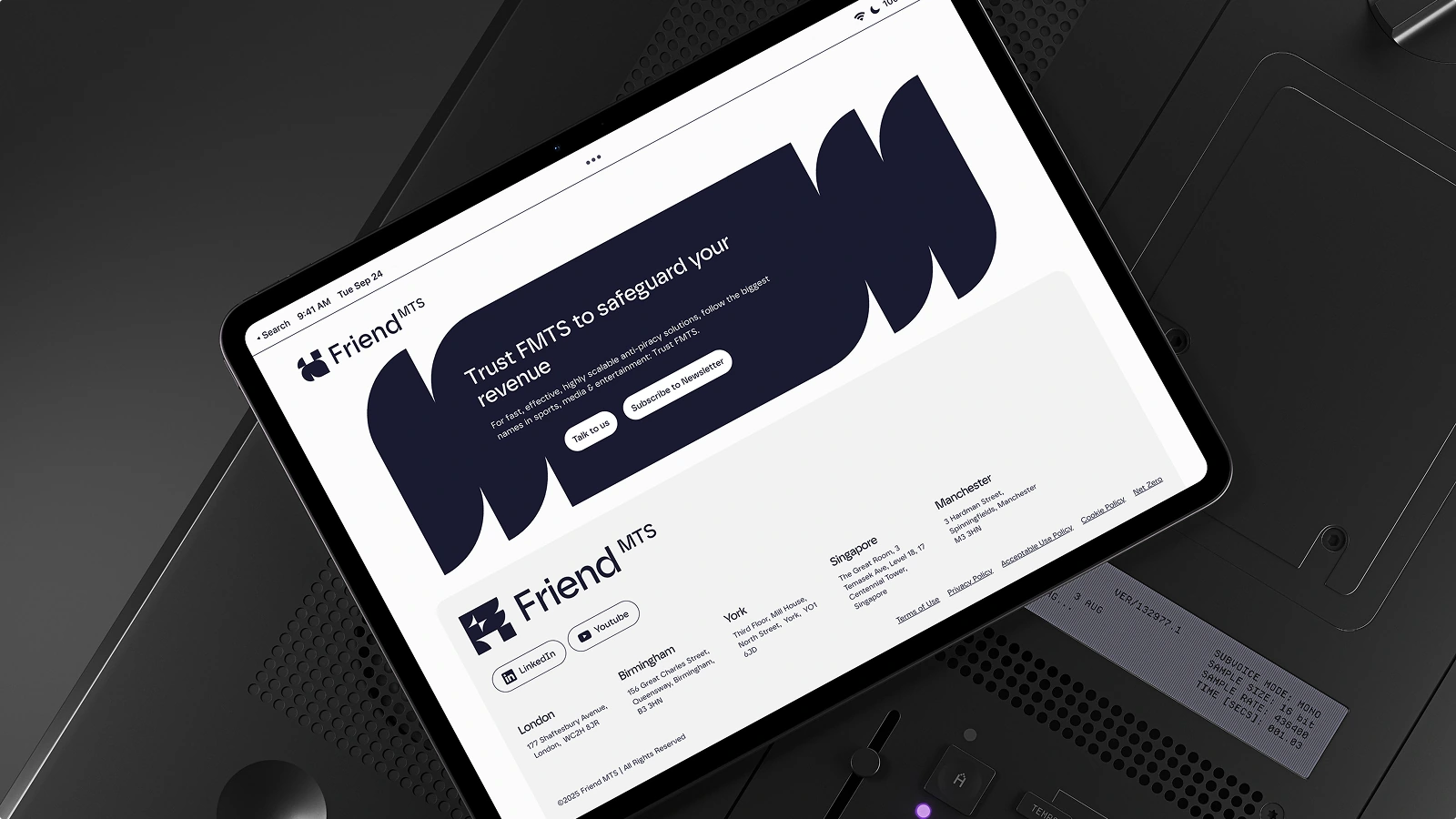
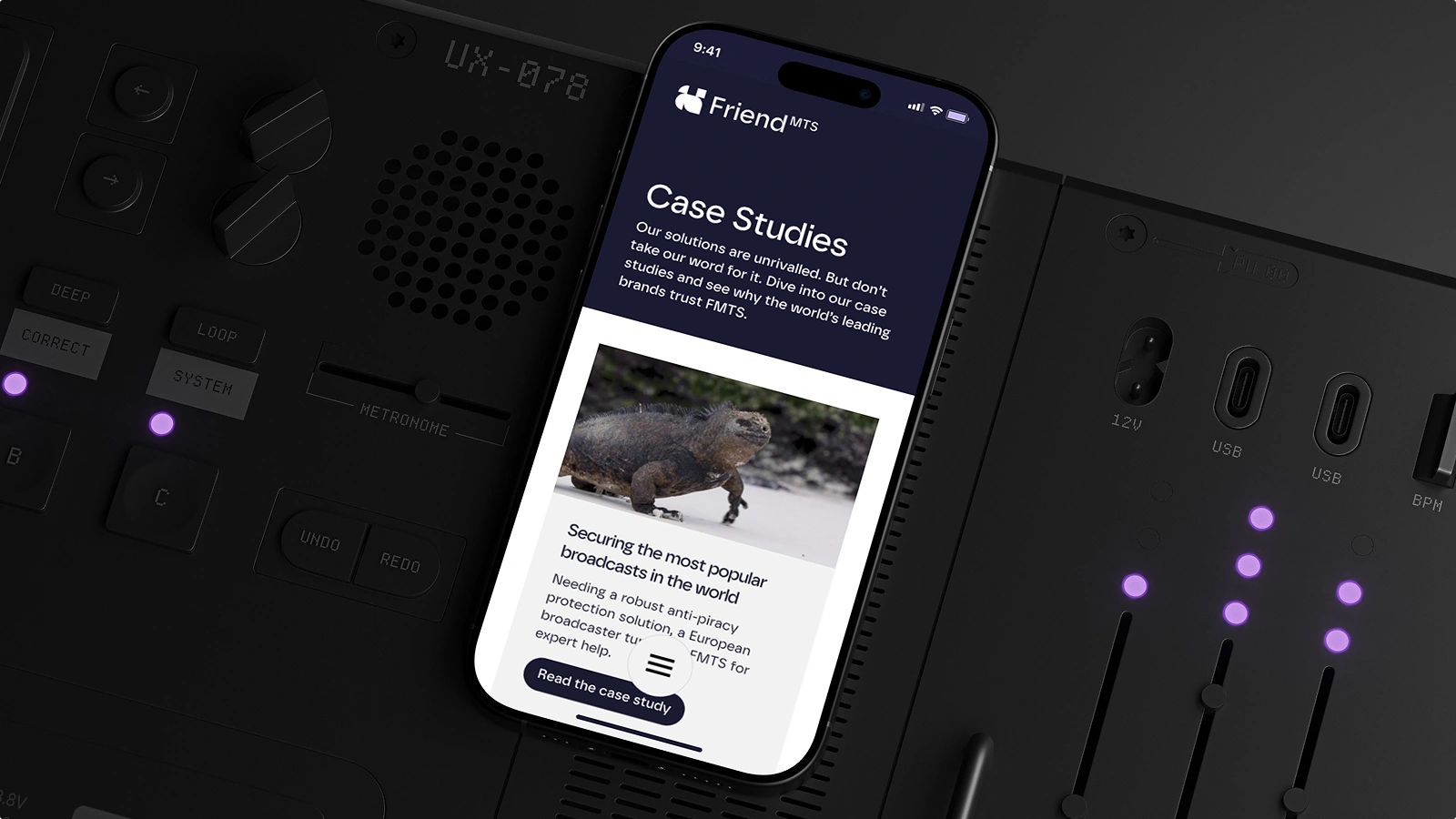
Friend MTS needed to reposition around technology, data, and innovation, but their brand and website hadn't caught up. Working alongside the creative director and specialist designers at Syndicut, I helped deliver a complete digital overhaul.
My focus was rebuilding the information architecture, creating lo-fi and hi-fi prototypes to test and refine the structure, and making sure UX standards were applied consistently throughout. I also designed their social assets and helped shape how the "piracy doesn't stand still" concept could work as an actual interactive experience rather than just messaging.
Design Approach
Approach, decisions, and outcomes
The central idea was that piracy is relentless and adaptive, so the brand needed to feel equally dynamic. I pushed for this to influence the experience itself, not just the copy: dynamic favicons that shifted based on site sections, a constantly animated logo, scroll-triggered CTAs, and a navigation that blurred the background when active. These weren't decorative. They reinforced the positioning and created the sense of constant movement that matched the industry Friend MTS operates in.
Throughout the project, I worked to keep UX principles at the centre, even when creative concepts threatened to complicate things. The IA was built to be future-proof, structured so that new products, regions, and content could slot in without needing to rebuild from scratch.
This project expanded my understanding of working across the full design lifecycle. Being involved from initial strategy through to post-launch refinements gave me a stronger grasp of how early IA decisions impact real user behaviour, and how to build systems that balance creative ambition with functional performance. The experience of shaping both brand and UX simultaneously, while maintaining consistency across web and social channels, has influenced how I approach integrated design projects ever since.
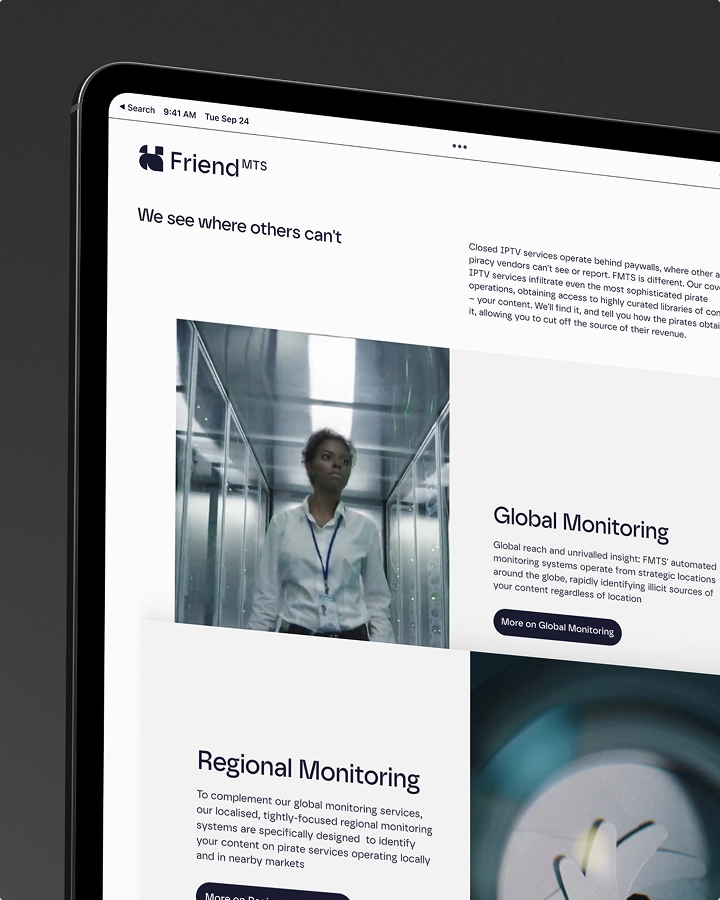
I prototyped the site structure using Relume, moving from lo-fi wireframes through to hi-fi prototypes as we tested and refined the approach. One of the biggest challenges was untangling internal jargon from user-facing language. Applying mental models, I renamed sections to align with how clients actually think about anti-piracy rather than how Friend MTS internally organised their services. This meant shifting from feature-led labels to outcome-driven navigation that spoke directly to broadcaster and rights holder needs.
The navigation was streamlined using Hick's Law. Fewer options meant faster decisions and clearer pathways to the information people actually needed. I applied progressive disclosure to manage the complexity of their services, revealing technical depth only when users were ready for it rather than dumping everything upfront. Visual hierarchy and Gestalt principles guided the layout, making sure that even dense technical content remained scannable.
Within three months of launch, the site saw a 42% increase in user engagement, a 25% boost in lead generation, and a 31% improvement in page load speeds.
The result: a digital presence that positions Friend MTS as both technically credible and forward-thinking, built on a system designed to move as fast as the threats they're tackling.
Case Studies
Key projects that I’ve helped bring to life
Selected work from projects that shipped. Real problems, real solutions, everything from brief through to launch.
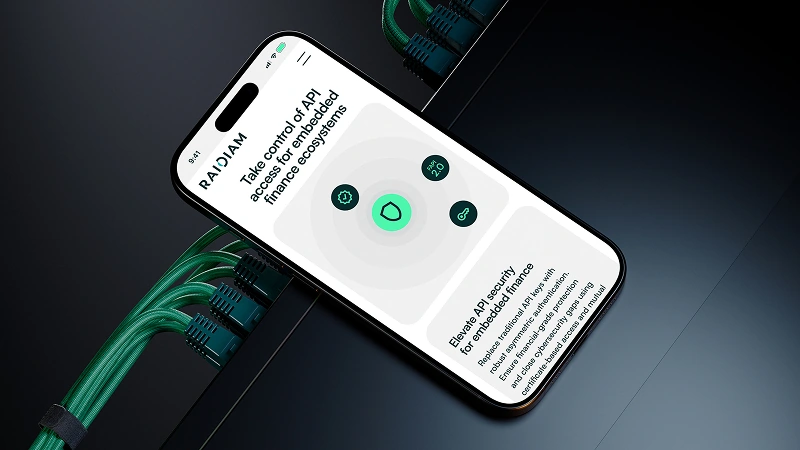
Designing Trust and Clarity for Complex Open Banking Infrastructure Systems
Translating complex open banking infrastructure into clear, accessible design across web and marketing materials for enterprise clients.
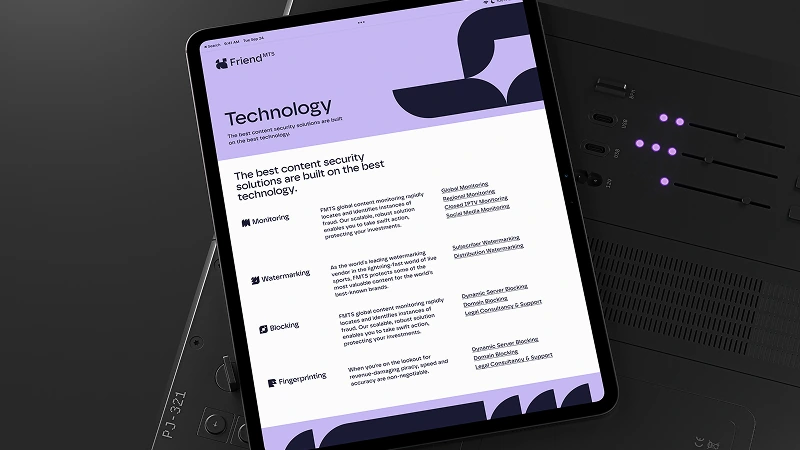
Building a Dynamic Digital Identity for Global Anti-Piracy Technology Leaders
Rebuilding information architecture and brand identity for a global leader in the anti-piracy technology and content security sector.